March 22, 2026
The Great Ocean Road in a Lamborghini: An Honest Review

By Colin Greig
Founder & Editor-in-Chief
I'll cut straight to it: the Great Ocean Road is as good as everyone says. The Lamborghini Huracán, on this particular road, is not. That's not a knock on the car — it's a knock on the pairing. Let me explain.
The Road
The Great Ocean Road stretches 243 kilometres along Victoria's southwestern coast, from Torquay to Allansford. It was built by returned soldiers after World War I as a memorial, and it's now one of Australia's most famous stretches of tarmac. The section most people care about — Torquay to Apollo Bay, then inland through the Otways to the Twelve Apostles — is about 190 kilometres and takes three to four hours without stops.
The scenery is genuinely world-class. Sheer cliff drops to the Southern Ocean, rainforest canopy through the Otway Ranges, and those iconic limestone stacks at the end. On a clear autumn day, with the light hitting the water right, it's hard to imagine a more beautiful coastal road anywhere.
The road surface is well-maintained for the most part. VicRoads keeps the main route in good condition, though there are patches — especially through the Otways — where the surface gets rough. No major potholes, but enough imperfections that you'll feel every one of them in a car with stiff suspension.
The Car (And Why I'd Choose Differently)
I hired a Lamborghini Huracán EVO from a Melbourne hire company for $2,200 AUD per day. Beautiful car. Screaming V10. Incredible in a straight line and on a track. But on the Great Ocean Road? It's too much car for the road, and not enough car for the conditions.
Here's the problem: the Huracán sits about 120mm off the ground. The Great Ocean Road has speed bumps in every town you pass through — Lorne, Apollo Bay, all of them. You'll be creeping over them at walking pace, listening to the scrape of the front lip, clenching everything. Driveways, car park entrances, any transition from road to gravel — all of them require the angled approach of a ship navigating shallow water.
The car is also 1.93 metres wide. Some sections of the Great Ocean Road are genuinely narrow, especially through the Otways where the road cuts through dense bush. When a tour bus comes the other way on a blind corner, you'll wish you were in something slimmer.
And the speed limits. This is the real killer. Most of the Great Ocean Road is 80 km/h, with 60 km/h zones through towns and some 100 km/h sections on the straighter bits. You're never going fast enough to feel what a Huracán can actually do. The V10 sounds amazing, but you're hearing it at 3,000 rpm in third gear. It's like hiring Pavarotti to hum quietly at your dinner party.
What I'd Hire Instead
If I did it again, I'd choose one of these:
Porsche 911 Turbo S or GT3 Touring — Higher ride height than the Lambo, narrower body, and a car that's brilliant at 80-100 km/h because the chassis is communicative even at low speeds. You'll actually feel the road talking to you. Around $1,000-1,400 AUD per day from Melbourne hire companies.
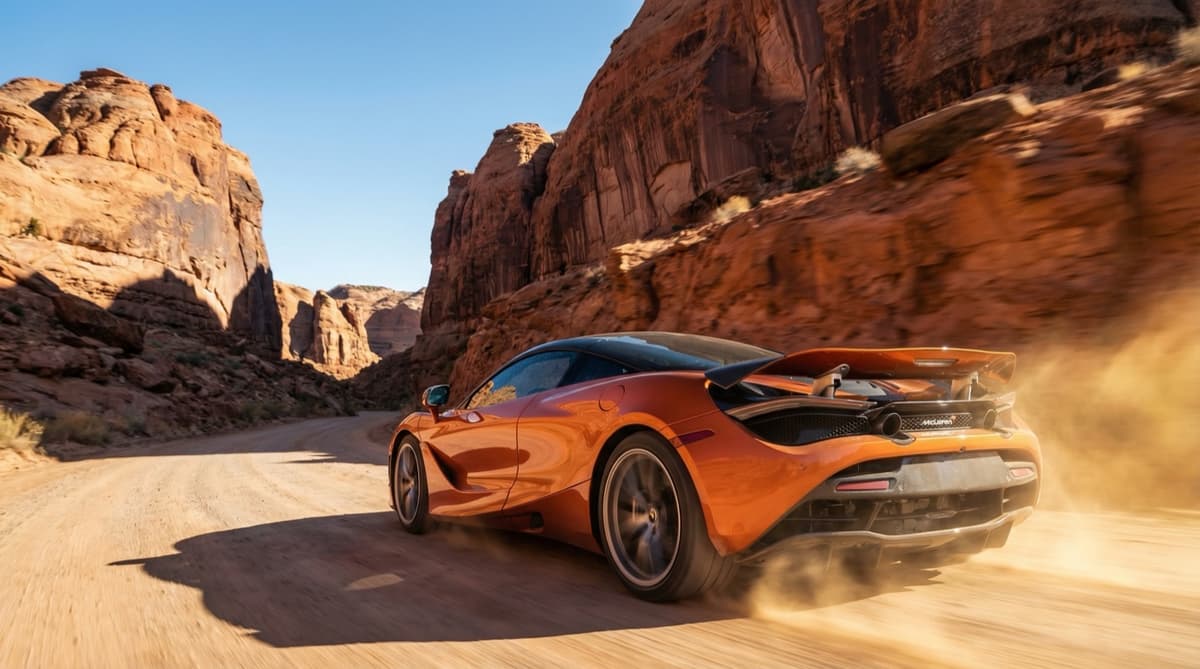
McLaren GT — This is maybe the ideal Great Ocean Road car. It's a grand tourer, so the ride is more forgiving. It has a front-end lift system for speed bumps. It's quick enough to feel special but comfortable enough for four hours in the seat. Around $1,600-2,000 AUD per day.
Porsche 718 Cayman GTS — Lighter, narrower, and cheaper to hire (around $600-900 AUD per day). The mid-engine balance on those Otway curves would be genuinely engaging even at legal speeds. This is my actual top pick for this road.
The Bad Bits (Being Honest)
Tourist traffic. Between October and April, the Great Ocean Road gets busy. Tour buses, campervans, and slow-moving rental cars clog the single-lane sections. You'll spend long stretches stuck behind a motorhome doing 65 in an 80 zone with no safe place to overtake. Go in May, June, or September for the best combination of weather and empty roads.
Fuel stops are sparse. There's fuel in Lorne, Apollo Bay, and not much in between. The Huracán's V10 does roughly 15-18 litres per 100km on these roads — worse if you're enjoying the exhaust note. Fill up in Torquay before you start, and again in Apollo Bay. Premium fuel (98 octane) was $2.35 AUD per litre when I went. Budget $150-200 AUD for fuel over the full return trip.
The return drive is long. Most people drive out along the coast and return via the inland M1 freeway. Smart move — the Great Ocean Road is much better westbound (you're on the ocean side) and driving it both ways in one day is tiring. The freeway return to Melbourne takes about two and a half hours.
Practical Tips
Pick up in Melbourne early. Leave by 7:30am to reach Torquay by 9am before the tour buses start. Most hire companies are in the inner southeast suburbs — Richmond, South Yarra, or near the airport.
Book for two days if you can. Doing the Great Ocean Road as a day trip is possible but rushed. Stay overnight in Lorne or Apollo Bay and do the second half the next morning. Many hire companies offer multi-day discounts — a two-day hire is often 1.6-1.7x the daily rate rather than 2x.
Check the weather forecast. A foggy or rainy day on the Great Ocean Road in a supercar is genuinely stressful. The road is fully exposed to Southern Ocean weather, and conditions change fast. A clear day makes all the difference.
Photograph everything at pickup. Stone chips are almost inevitable on this road. Make sure any existing marks are documented before you leave the lot.
Was It Worth It?
Absolutely — even in the wrong car. The Great Ocean Road is a genuinely special piece of road, and driving it in something exotic elevates the experience significantly. I just wouldn't pick a Huracán again. A Porsche or McLaren GT would've let me enjoy both the road and the car rather than constantly managing the mismatch between them.
Melbourne has 15 exotic car hire companies in our directory, and several of them specifically offer Great Ocean Road packages with suggested routes and overnight recommendations. Start there.
Frequently Asked Questions About Hiring a Supercar on the Great Ocean Road
Is a Lamborghini Huracán a good choice for the Great Ocean Road?
Not particularly. The Huracán sits 120mm off the ground and is 1.93 metres wide — both problems on a road with speed bumps through every coastal town, rough patches in the Otways, and narrow sections when tour buses pass. Speed limits of 60–80km/h mean you never drive hard enough to feel what the car actually does. The pairing looks better on paper than it drives in reality.
What car should I hire for the Great Ocean Road instead?
The Porsche 718 Cayman GTS (A$600–900/day) is the best match — lighter, narrower, and genuinely engaging at legal speeds thanks to its mid-engine balance. The McLaren GT (A$1,600–2,000/day) suits longer days well; its front-lift system handles speed bumps without drama. A Porsche 911 Turbo S (A$1,000–1,400/day) is a strong middle ground if you want more power.
How long does the Great Ocean Road drive take from Melbourne?
Allow a full day. The main section from Torquay to the Twelve Apostles covers roughly 190 kilometres and takes three to four hours without stops — add Lorne, Apollo Bay, and the Twelve Apostles lookouts and it stretches to six or seven hours. The drive from Melbourne's CBD to Torquay adds about 90 minutes each way.
How many kilometres is the full Great Ocean Road return trip from Melbourne?
Roughly 550–600km for a Melbourne CBD return via Torquay to the Twelve Apostles and back via the inland Princes Highway. Most Melbourne hire companies impose a daily mileage cap — confirm the allowance and per-kilometre overage rate before booking, as a full-day trip will push or exceed a standard 300km daily cap.
Are there speed cameras on the Great Ocean Road?
Yes. VicRoads runs mobile and fixed cameras along the route, particularly through Lorne and Apollo Bay town zones where the limit drops to 60km/h. Most open sections are 80km/h. The enforcement is real and consistent. Pick a car that rewards you at 80km/h — the Cayman GTS fits that profile far better than the Huracán does.